



Transitioning from Summer Earthmoving to Winter Snow Removal: Light Construction Equipment Upgrades
Premise
In Canada, the seasonal shift between autumn and winter often presents commercial contractors with a stark operational choice: park expensive earthmoving machinery and shoulder months of depreciation, or pivot swiftly into commercial snow and ice management. By leveraging modern quick-attach systems, modular hydraulic implements, and targeted cold-weather mechanical modifications, landscape and excavation businesses can transform standard light construction fleets into high-efficiency, multi-season assets that protect cash flow and retain skilled operators year-round.
Introduction
The end of the earthmoving season across Canada does not have to signal an end to recurring revenue. For decades, construction and landscaping outfits accepted a boom-and-bust cash cycle, mothballing skid steers, compact track loaders (CTLs), and compact wheel loaders once the frost set in. Today’s tight operating margins and high capital costs make that model obsolete. Light construction machinery represents a versatile power platform designed to endure sub-zero operating environments when properly outfitted. Transitioning your fleet from moving topsoil, gravel, and aggregate to pushing heavy slush, drifting powder, and packed ice requires deliberate preparation.
Equipping your machinery for winter demands a systematic overhaul spanning hydraulic flow management, traction optimization, heating systems, and operator safety. High-performance snow attachments place distinct structural and auxiliary demands on compact platforms that standard digging buckets never encounter. Successfully executing this seasonal changeover protects your machinery from accelerated cold-weather wear while positioning your company to win lucrative municipal, industrial, and commercial snow contracts. Below are ten critical upgrades and operational adjustments necessary to successfully transition light construction machinery into dependable winter workhorses.
1. High-Performance Hydraulic Snow Blowers
For deep drifts, heavy lake-effect snowfalls, and sites with constrained piling room, front-mounted commercial snow blowers deliver exceptional clearing volume by throwing snow well clear of driving lanes and walking paths. These units rely heavily on continuous hydraulic horsepower, making it essential to match the attachment’s displacement to your machine’s auxiliary flow ratings (standard flow versus high-flow). Dual-stage blowers chew through frozen windrows and discharge material through hydraulically controlled rotating chutes, eliminating the need to haul excess piles away in dump trucks.
- Look for models with electro-hydraulic chute rotation and deflector controls wired directly into your loader’s cab joysticks.
- Ensure your auxiliary relief pressures are calibrated correctly to avoid overheating hydraulic fluid during prolonged heavy blowing.
- Use serrated flight augers and replaceable, hardened-steel cutting edges to prevent premature drum wear when chewing through packed roadside banks.
2. Commercial Pushers and Sectional Containment Plows
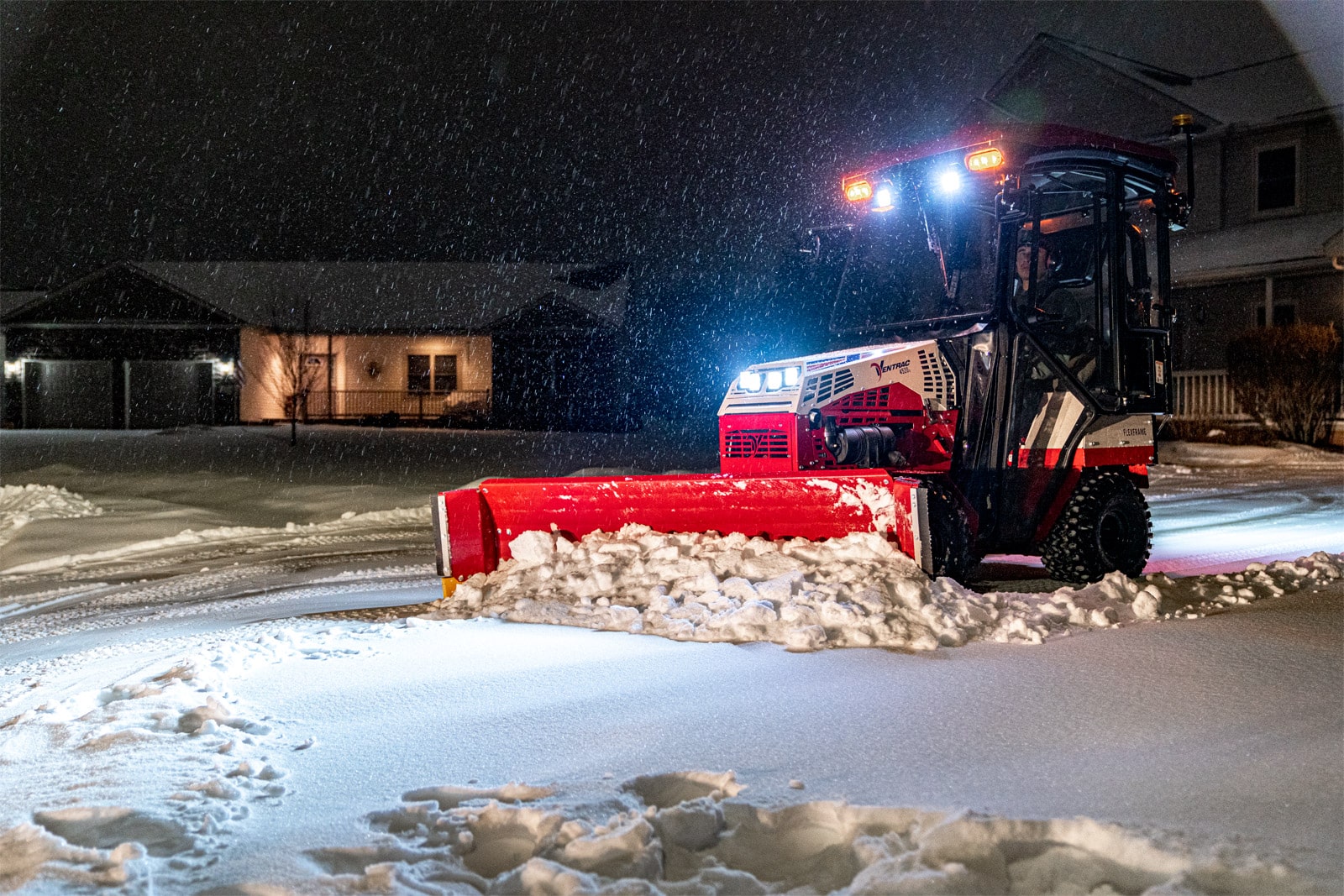
Containment plows—frequently termed snow pushers or box plows—are indispensable for clearing wide-open commercial plazas, distribution centres, and industrial parking fields. While traditional dirt buckets spill snow around the edges, pushers trap huge volumes of snow and roll it forward in a clean sweep. Modern sectional containment plows feature independent, spring-loaded steel trip segments that contour over uneven asphalt, storm drains, and frost heaves without damaging pavement or jolting the operator.
- Sectional designs clean right down to the pavement on the first pass, cutting secondary salt usage by up to 50 percent.
- Rubber, polyurethane, or steel trip-edge configurations should be chosen based on the surface material and client damage liability thresholds.
- Heavy-duty side wings with reinforced wear shoes stop side-spill and stabilize the loader at higher scraping speeds.
3. Reversible and Multi-Position V-Plowing Systems
When maneuvering through tight lanes, parked vehicle lots, and narrow service alleys, fixed pushers lack the flexibility required to route snow away from structures. Multi-position V-plows and power-angling straight blades bridge this operational gap by allowing operators to switch instantly between V-formation (for breaking open tough, frozen trails), scoop mode (for capturing and moving piles), and angled blading (for windrowing snow off to the road shoulder).
- Heavy-duty industrial V-plows require dual-acting crossover relief valves to protect the loader arm linkages from severe impact shock when striking concealed curbs.
- Polyurethane edge attachments provide non-marking, quiet performance on decorative stone pathways and sensitive concrete surfaces.
- Blade oscillation capabilities allow the moldboard to pitch and roll alongside ground irregularities for an even cut across uneven lots.
4. Cold-Weather Traction Optimization and Winter Track Systems
Standard aggressive dirt tracks on compact track loaders turn rigid and slick when ambient temperatures plunge below freezing, leading to dangerous loss of traction on packed ice and hard-packed snow. Outfitting wheeled skid steers and compact wheel loaders with designated siped winter radial tires drastically improves stopping distance, cycle times, and fuel economy. For tracked machines, swapping to non-metal embedded rubber tracks featuring specialised block or zig-zag patterns with high natural-rubber content prevents slipping and turf tearing.
- Outfitting wheeled machines with hardened alloy steel tire chains provides the aggressive bite needed for working on sloped access ramps.
- Cold-temperature track compounds resist cracking and chunking when running over frozen debris or sharp curb edges.
- Regularly clean frozen slush and compacted road mud from the undercarriage rollers and idlers at shift-end to prevent seized track components.
5. Engine and Hydraulic Pre-Heating Infrastructure
Starting a modern common-rail diesel engine in deep Canadian sub-zero conditions causes extreme friction, battery depletion, and high cylinder wear if the block and fluids remain unconditioned. Equipping your fleet with dedicated block heaters, oil pan heating pads, and hydraulic reservoir heating blankets ensures clean combustion and fluid fluidity before the engine even turns over. These systems minimize white-smoke emissions, extend starter-motor lifespan, and prevent hydraulic pump cavitation during early morning cold starts.
- Install heavy-duty, weather-sealed electrical shore-power plugs on machine frames for simple overnight plug-in access at yards or jobsite trailers.
- Utilize synthetic low-viscosity 0W-40 engine oils and high-viscosity-index (VI) all-weather hydraulic fluids engineered to flow quickly in deep cold.
- Consider automated diesel-fired coolant pre-heaters (hydronic heaters) for machines stationed on remote commercial jobsites devoid of grid power.
6. Electrical System Fortification and High-Output Lighting
Winter operations are conducted predominantly in darkness, blinding blizzard squalls, and high-traffic conditions, making visibility and electrical reliability non-negotiable. Upgrading factory halogen lighting packages to high-output, low-draw LED scene lights, roof bars, and side-perimeter flood arrays illuminates hazards and pedestrian traffic. Simultaneously, cold temperatures cut standard battery cranking power in half, requiring high cold-cranking-amp (CCA) heavy-duty battery replacements and high-output alternator upgrades to support demanding multi-axis plow solenoids.
- Equip loaders with amber and blue high-visibility flashing strobe arrays compliant with local provincial municipal snow clearing regulations.
- Integrate heated LED headlamps with integrated lens heating elements that melt freezing spray, slush, and blowing snow on contact.
- Inspect, clean, and grease all primary earth ground points and auxiliary electrical harness plugs with dielectric grease to stop corrosion from liquid de-icers.
7. Cab Enclosure Climate Control and Ergonomic Upgrades
Operator retention and jobsite safety depend on cab comfort, particularly during grinding twelve-to-sixteen-hour storm cleanup shifts. Retrofitting open-canopy light equipment with heavy-duty automotive-grade tempered glass enclosures, high-BTU auxiliary water heaters, and heavy airflow defroster systems keeps windows clear of condensation and exterior ice buildup. Operators who stay warm remain vigilant, make fewer costly operational mistakes, and reduce accidental property strikes.
- Check door and frame weather-stripping for draught seals and install heated, air-suspension seating to mitigate back fatigue on rough pavement surfaces.
- Outfit your cab glass with secondary electric defrost elements or auxiliary high-velocity dashboard circulation fans to maintain side-mirror visibility.
- Add heavy-duty, deep-ribbed rubber floor mats that capture melting boot slush and prevent interior floorboard corrosion and foot pedal slippage.
8. Salt, Sand, and Liquid Brine Spreader Attachments
Moving beyond simple snow relocation, modern commercial winter maintenance contracts demand comprehensive anti-icing and de-icing capabilities. Upgrading your machines with rear-mounted or front-bucket-mounted broadcast salt and sand spreaders allows single-operator crews to scrape, scoop, and treat parking surfaces in one pass. Advanced electric and hydraulic-driven hopper spreaders dispense granular materials or liquid brine with precise metering, preventing wasteful over-application and landscape damage.
- Choose poly or marine-grade stainless steel hopper construction to resist severe chemical corrosion from rock salt and calcium chloride blends.
- Calibrate your spreader controls directly to ground-speed parameters to maintain a uniform application rate irrespective of travel speed.
- Install high-torque inverted-V vibrator packs inside hoppers to prevent damp salt and abrasive sand mixtures from bridging over the auger throat.
9. Undercarriage and Hydraulic Cylinder Anti-Corrosion Defences
De-icing materials—especially modern liquid salt additives like magnesium chloride and calcium chloride—are highly corrosive compounds that rapidly degrade wiring, hydraulic cylinder rods, seals, and painted steel surfaces. Implementing rigorous anti-corrosion barrier coatings across vulnerable machine areas protects long-term resale value and operational dependability. Washing equipment regularly with dedicated salt-neutralizing detergents prevents chemical accumulation in enclosed undercarriage pockets.
- Apply heavy lanolin- or wax-based corrosion-inhibiting chemical sprays across the chassis underside, harness connections, and pin joints before the first storm.
- Inspect chrome hydraulic cylinder rods for pitting; store cylinders fully retracted whenever possible during outdoor parking to keep rods sealed inside oil baths.
- Frequently pressure-wash undercarriage rail systems, track frames, and pivot pins with high-pressure warm water and specialized salt-stripping soaps.
10. Digital Fleet Telematics and Jobsite Verification Systems
Modern commercial property owners expect real-time proof of service, precise time-stamped activity records, and rapid response verification to manage their slip-and-fall legal exposures. Integrating telematics hardware and specialized snow management fleet software turns your light construction equipment into trackable, verifiable service units. Fleet telematics record engine run hours, geofenced jobsite entries and exits, attachment usage patterns, and operating speeds.
- Install telematics modules linked with plow-position sensors to automatically log when the plow blade is down and actively working on the target property.
- Maintain automated, cloud-backed historical GPS operational trails to defend your business against fraudulent third-party slip-and-fall injury claims.
- Monitor live fuel consumption, engine codes, and hydraulic fluid temperatures remotely to dispatch mobile mechanics before minor issues become catastrophic downtime.
Conclusion
Transitioning your light construction machinery into an elite winter snow response fleet is a proven strategy for balancing revenue across all four Canadian seasons. Maximizing this transition requires more than just hanging a basic plow on the quick-attach plate; it demands dedicated planning around cold-weather durability, attachment hydraulic efficiency, electrical resilience, and operator environment. Investing in the right hydraulic attachments, traction setups, and protective maintenance keeps your loaders working reliably through sub-zero conditions, transforming off-season liabilities into dependable profit centres.
Contact Us
Ready to winterize your compact fleet or expand your seasonal capability with top-tier attachments and snow-ready light construction equipment? Visit our knowledgeable equipment specialists to review your machinery setup, discuss hydraulic compatibility, and source factory parts.
Oneida Caledonia
- Address: 634 Fourth Line, Caledonia, ON, N3W2B3
- Call: 905-765-5011
- Website: https://oneidanewholland.com/
Oneida Niagara
- Address: 1410 Fourth Avenue, St. Catharines, ON, L2S 0B8
- Call: (905) 688-5160
- Website: https://oneidanewholland.com/
Frequently Asked Questions (FAQ)
Q1. Can I use my standard compact track loader (CTL) for commercial snow removal?
A1. Yes, but you must address traction and cold-weather operation. Standard aggressive dirt tracks become rigid and lose grip on ice, increasing the risk of sliding. Upgrading to winter-specific rubber tracks with high natural-rubber content, installing siped blocks, or utilizing non-marking snow tracks significantly improves stability and pushing performance.
Q2. What is the difference between standard-flow and high-flow hydraulics for winter attachments?
A2. Standard-flow hydraulics operate at lower gallons per minute (GPM) and are adequate for running basic angling plows, simple spreaders, and small V-blades. High-flow auxiliary hydraulics supply higher fluid volume and pressure, which is necessary for high-capacity dual-stage snow blowers and cold planers to maintain power without bogging down in heavy drifts.
Q3. How does a sectional snow pusher cut down on salt usage?
A3. Sectional pushers feature independent, spring-loaded moldboard blocks that articulate over undulating pavement, frost heaves, and dips. Because the blade maintains uniform ground contact and scrapes down to the asphalt on the initial pass, contractors do not need to apply heavy layers of salt to burn off remaining hard-pack snow layers.
Q4. Why are block heaters and synthetic fluids essential for light equipment in winter?
A4. Cold temperatures thicken conventional engine and hydraulic oils, leading to starved pumps, cylinder cavitation, and excessive engine cylinder wear during startup. Block heaters and synthetic lubricants ensure instant lubrication flow, preserve battery cranking reserve, and reduce stress on starting motors during deep Canadian freezes.