



Spring Ready: Preparing Your Lawn for a Robotic Mower Installation in Niagara
Precision Meets Preparation: Setting the Stage for a Flawless Niagara Lawn with Husqvarna Technology.
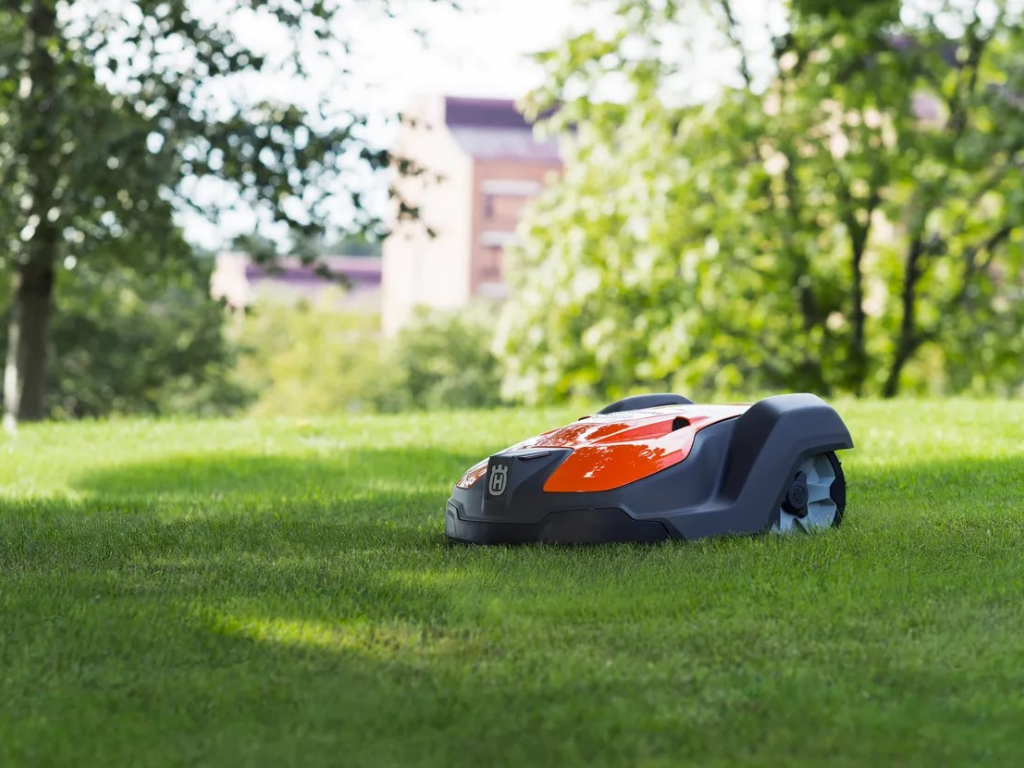
As the Niagara Peninsula shakes off the final frost of winter, homeowners are looking toward a more efficient, automated future for their outdoor spaces. The transition to a robotic mowing system, such as the Husqvarna Automower®, represents a significant shift from traditional lawn maintenance. However, the success of this technology is not just in the hardware, but in the environment it inhabits. This article serves as a comprehensive technical and practical guide for Niagara residents, focusing on the essential “Spring Ready” steps required to transform a rugged winter lawn into a high-tech, autonomous landscape. By prioritizing soil health, debris management, and strategic boundary planning, property owners can ensure their robotic investment delivers a golf-course finish all season long.
Introduction
Spring in the Niagara region is a season of dramatic transformation. From the Escarpment to the shores of Lake Erie, the landscape awakens with a burst of growth that can often overwhelm traditional mowing schedules. For those looking to reclaim their weekends and achieve a consistently pristine lawn, the robotic mower has become the gold standard of modern landscaping. Unlike traditional mowers that tackle overgrown grass every seven to ten days, a robotic mower maintains the lawn daily, “grazing” the grass for a healthier, more lush appearance. But before the first blade of grass is cut, the foundation must be set. Preparing for a robotic mower installation is a specialized process that requires an understanding of your local soil conditions, the unique topography of your property, and the logistical requirements of autonomous navigation. By taking the time in early spring to clear the debris of winter, level the terrain, and meticulously plan your boundary wire layout, you ensure that your mower operates with peak efficiency and zero interruptions. This guide outlines the ten essential pillars of preparation to get your Niagara property ready for the future of lawn care.
1. Conduct a Comprehensive Post-Winter Debris Sweep
The first step in preparing any Niagara property for a robotic mower is the removal of physical hazards that have accumulated during the winter months. Because robotic mowers operate with high-precision, small-scale blades, they are sensitive to hard objects like fallen branches, stones pushed up by frost heave, and hidden refuse. A thorough sweep ensures that your mower can navigate without the risk of blade damage or getting “beached” on a large limb. In the Niagara region, where spring winds can be particularly harsh, this step is vital for protecting the longevity of your machine’s cutting deck.
- Check specifically for “frost heave” rocks that may have been pushed to the surface of the soil during the winter freeze-thaw cycles.
- Remove all fallen branches larger than one inch in diameter, as these can become lodged in the mower’s chassis.
- Clear away any leftover winter mulch or heavy leaf piles that can clog the mower’s sensors or impede its traction.
2. Analyze and Remediate Soil Compaction
Niagara soil can vary from heavy clay in the northern reaches to sandier loams further south, and both are subject to compaction after a heavy snow load. Compacted soil prevents water and nutrients from reaching the roots, but for a robotic mower, it also creates a hard, unforgiving surface that can lead to “slipping” during wet conditions. By aerating your soil in the spring, you create a more stable, permeable surface that provides better traction for the mower’s wheels and encourages the thick turf growth that robotic mowers manage so effectively.
- Use a core aerator to relieve pressure in high-traffic zones where the mower will frequently travel to reach its charging station.
- Test soil pH levels to ensure your grass is healthy enough to handle the daily “micro-clipping” schedule of a robotic system.
- Overseed thin areas immediately after aeration to create a dense carpet that prevents the mower from kicking up mud or dust.
3. Leveling High Spots and Filling Ruts
Robotic mowers are designed to handle impressive slopes, but sudden, sharp changes in elevation—such as deep ruts from a vehicle or high mounds of dirt—can cause the mower to scalp the grass or become stuck. Spring is the ideal time to “top-dress” your lawn. This involves applying a mixture of sand and topsoil to low spots and tamping down high ridges. A level lawn is the difference between a mower that operates autonomously and one that requires constant “rescue” from a backyard hole.
- Focus on filling ruts deeper than two inches, as these can trap the small front wheels of the robotic mower.
- Use a leveling rake to distribute topsoil evenly across the property, ensuring a smooth transition between different lawn sections.
- Allow filled areas to settle and firm up before the first installation of the boundary wire to prevent the wire from shifting.
4. Defining the Boundary Wire Perimeter
The boundary wire is the “invisible fence” that tells your robotic mower where the lawn ends and the flower beds begin. Planning this layout is the most critical logistical step in the installation process. In Niagara, where many properties feature intricate landscaping or varied edges, you must decide where the mower will turn and where it will be excluded. This requires a bird’s-eye view of your property to minimize complex turns and ensure the mower has a clear “line of sight” for its GPS or signal sensors.
- Measure the total linear footage of your lawn’s perimeter to ensure you have enough wire for a continuous, unbroken loop.
- Plan for a 12-to-15-inch buffer between the wire and solid obstacles like walls or fences to prevent the mower from scuffing its chassis.
- Identify “islands”—areas like central trees or decorative fountains—that will require their own dedicated loops of wire to keep the mower away.
5. Optimizing Guide Wire Paths for Multi-Zone Lawns
While the boundary wire keeps the mower contained, the guide wire is what helps the mower find its way back to the charging station and navigate through narrow passages. For Niagara properties with front and back yards connected by narrow side strips, the guide wire is essential. You must plan a path that is free of obstacles and follows the most direct route possible. If the path is too convoluted, the mower may deplete its battery searching for home, leading to a “dead on the lawn” scenario.
- Ensure the guide wire path has at least four feet of clearance on either side in narrow corridors to prevent “tracking” (wear patterns) in the grass.
- Avoid laying the guide wire across steep slopes where the mower might struggle to maintain a straight line while docking.
- Plan the path so that it begins at the furthest point of the lawn and leads directly into the center of the charging station.
6. Edge Preparation and Trimming Strategy
Robotic mowers are excellent at maintaining the bulk of a lawn, but due to their safety housings, they cannot cut grass that grows right up against a vertical wall or a deep drop-off. To get your lawn “Spring Ready,” you should consider installing “mower-friendly” edging. Flat stones or pavers placed at the same level as the grass allow the mower to overlap the edge, resulting in a clean cut that eliminates the need for manual string trimming.
- Install a 4-to-6-inch wide flat border around gardens and fences to allow the mower’s blades to reach the very edge of the grass.
- Trim back overhanging low-hanging branches or shrubs that may interfere with the mower’s top-mounted stop button or GPS antenna.
- Check for “hidden” edges, such as the transition from lawn to gravel driveways, and ensure the boundary wire is placed to prevent the mower from wandering into the stones.
7. Selecting the Ideal Charging Station Location
The “home” of your robotic mower needs to be a location that is both functional and discreet. In the Niagara region, where summer sun can be intense and rain can be heavy, the charging station should ideally be placed in a shaded, well-drained area. It requires access to an outdoor power outlet and a flat, level piece of ground. If the station is tilted, the mower may fail to dock correctly, leading to charging errors and interrupted schedules.
- Place the station within reach of a 120V outdoor-rated power outlet, avoiding the use of long, daisy-chained extension cords.
- Select a central location if possible to minimize the distance the mower has to travel from any given point on the property.
- Ensure there is at least six feet of straight, level ground in front of the station to allow the mower to align itself for a perfect dock.
8. Managing “Island” Obstacles and Root Protection
Large trees are a staple of the Niagara landscape, but their roots can create a “minefield” for robotic mowers. Surface roots can damage blades or cause the mower to get stuck. During your spring prep, identify trees with protruding roots and decide whether to “island” them off with boundary wire or add a layer of mulch to create a smooth ramp over the roots. Protecting the mower from these impacts is key to maintaining the high-speed precision of its cutting system.
- Apply a fresh layer of shredded bark or wood chips around the base of trees to “smooth out” the transition from grass to root.
- Use the boundary wire to create a “no-go zone” around delicate flower beds or areas with soft, decorative gravel.
- Check for low-lying tree fruit or nuts (like walnuts or acorns) that may have dropped, as these should be cleared before the mower begins its season.
9. Establishing a Multi-Zone Logic for Complex Yards
If your Niagara property is divided by a driveway, a fence, or a steep retaining wall, you may need to establish multiple “zones.” Some mowers can be programmed to cross a driveway to reach a second patch of grass, while others may require being manually moved. Planning these zones in the spring allows you to install the necessary wiring and “gates” before the grass starts its rapid growth phase. Understanding the flow of your yard ensures no patch of grass is left untended.
- Decide on “Main Area” vs. “Secondary Area” logic based on where the mower can travel autonomously.
- If the mower must cross a sidewalk or driveway, ensure the wire is protected in a shallow groove or expansion joint to prevent damage from car tires.
- Program the mower’s starting points along the guide wire to ensure it spends an equal amount of time in each zone of the yard.
10. Final Power and Connectivity Audit
Modern robotic mowers, especially those from the Husqvarna line, rely on connectivity for software updates and remote control via smartphone. Before the official installation, ensure that your property’s Wi-Fi or cellular signal reaches the area where the mower will spend most of its time. Additionally, verify that your outdoor electrical circuits are up to code and equipped with GFCIs (Ground Fault Circuit Interrupters) to handle the constant, low-draw charging of the mower throughout the Niagara rainy season.
- Test the Wi-Fi signal at the furthest corners of your yard and consider a range extender if the connection is weak.
- Inspect all outdoor outlets for weather-tight covers to ensure the charging transformer remains dry during spring downpours.
- Download the manufacturer’s app (such as Automower® Connect) ahead of time to familiarize yourself with the interface and scheduling options.
Conclusion
Transitioning to a robotic mower is more than just a purchase; it is an investment in the long-term health and aesthetics of your Niagara property. By following these ten steps—from the initial debris sweep to the final connectivity audit—you are creating an environment where technology and nature can coexist seamlessly. A well-prepared lawn allows the robotic mower to do what it does best: maintain a perfect, consistent height without the need for human intervention. As the lush greenery of the Niagara Peninsula begins to take hold this spring, you can rest easy knowing your lawn is ready for the precision, silence, and efficiency of the robotic age. The effort you put into preparation today will be rewarded with a season of effortless beauty and a lawn that is the envy of the neighborhood.
Contact Oneida New Holland for Your Robotic Mower Consultation:
Oneida Caledonia
- Address: 634 Fourth Line, Caledonia, ON, N3W2B3
- Call: 905-765-5011
- Website: https://oneidanewholland.com/
Oneida Niagara
- Address: 1410 Fourth Avenue, St. Catharines, ON, L2S 0B8
- Call: (905) 688-5160
- Website: https://oneidanewholland.com/
Frequently Asked Questions (FAQ)
Q1: Can a robotic mower handle the steep slopes found along the Niagara Escarpment?
A1: Yes, many models, particularly the Husqvarna AWD (All-Wheel Drive) series, are designed to handle inclines of up to 70%. During your boundary planning, we can help you identify the best path for the mower to navigate these slopes safely.
Q2: How does the mower handle the heavy rain common in Niagara springs?
A2: High-quality robotic mowers are designed to be weather-proof and can mow in the rain. However, the preparation step of leveling ruts is crucial, as wet soil can become slippery if the lawn is uneven.
Q3: Will the boundary wire be visible on my lawn?
A3: Initially, the wire is pegged to the surface of the grass, but within a few weeks, the grass grows over it, making it completely invisible. For a more permanent solution, the wire can also be professionally trenched a few inches into the soil.
Q4: Do I need to remove my old mower completely?
A4: While the robotic mower handles the daily maintenance, it is always a good idea to keep a small trimmer for the very edges of your property where the boundary wire meets a wall, unless you have installed flat “mower-friendly” edging.
Q5: What happens if the mower hits a stray branch I missed during my spring sweep?
A5: Most robotic mowers are equipped with collision sensors. If it hits a large object, it will gently bump into it, stop, and turn in a different direction. However, clearing branches is still recommended to protect the blades from dulling prematurely.