



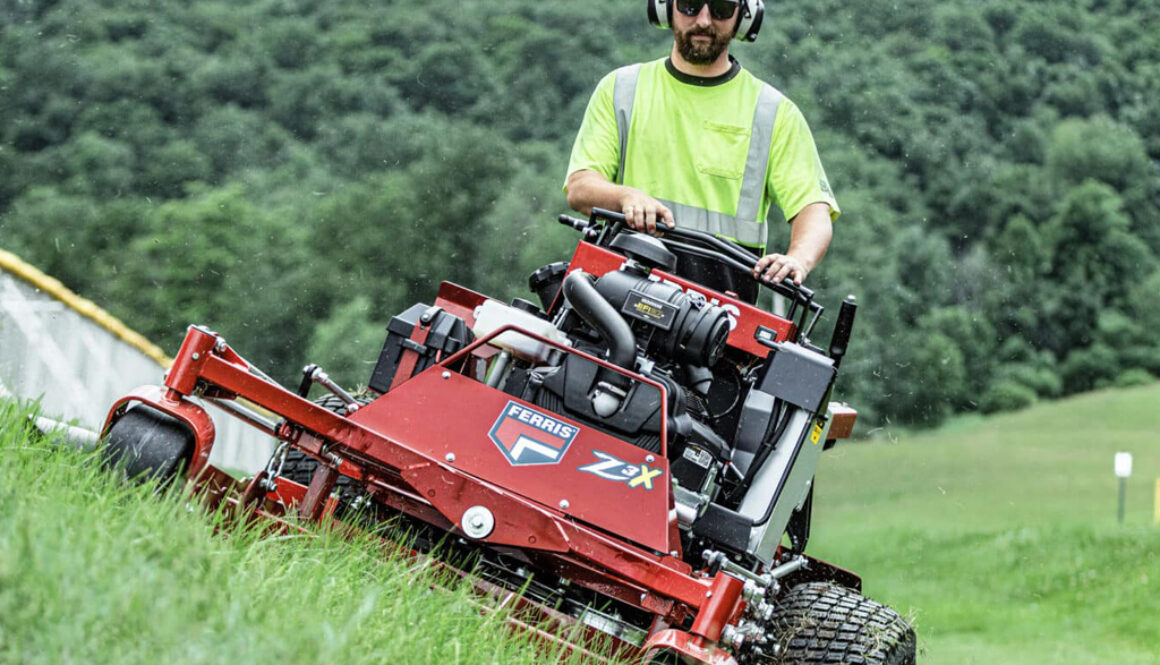
Maximizing Efficiency: Why Your Fleet Needs a Stand-On Mowers
Stand Tall, Cut Fast: Revolutionizing Commercial Productivity with Ferris SRS.
The commercial landscaping industry is built on a simple, unforgiving equation: time plus square footage equals profit. For years, the traditional sit-down zero-turn mower (ZTR) was the undisputed king of the fleet, offering speed and power for wide-open spaces. However, as properties become more intricate and labor costs rise, the limitations of large, bulky sit-down units have become more apparent. Enter the stand-on mower—a machine once relegated to niche tasks that has now matured into a primary production tool. Specifically, the Ferris SRS™ (Soft Ride Stand-On) series has shifted the paradigm by integrating the industry’s most advanced suspension technology into a compact, nimble frame. By allowing operators to stand, these machines bridge the gap between the speed of a ZTR and the agility of a walk-behind, creating a new standard for fleet efficiency.
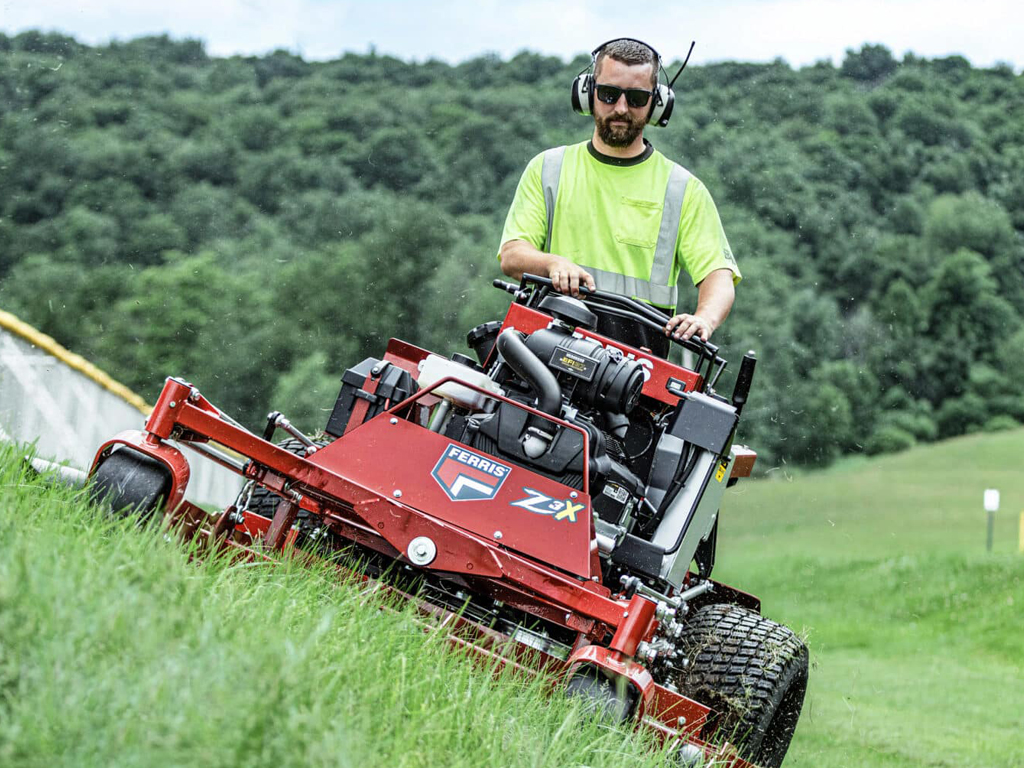
1. Unmatched Maneuverability in Tight Spaces
The primary advantage of the Ferris SRS series over traditional zero-turns is its compact footprint. Traditional sit-down mowers often have a long wheelbase and a bulky rear end that makes navigating tight gates, flower beds, and intricate hardscaping a multi-point turn ordeal. The Ferris SRS Z1 and Z2 models are engineered with a significantly shorter chassis, allowing them to spin within their own footprint with surgical precision. This agility means less time spent “jockeying” the machine around obstacles and more time with the blades engaged.
- Shorter Wheelbase: Enables 180-degree turns in narrow corridors where sit-down mowers would be trapped.
- Zero-Turn Radius: Offers the same “spin-on-a-dime” capability as larger units but in a frame that fits through standard 36-inch or 48-inch gates.
- Curb Climbing: The standing position and balanced weight distribution allow for easier mounting of curbs and transitions between different turf levels.
2. The Power of Patented Suspension Technology
Ferris is synonymous with suspension, and the SRS series is no exception. While most stand-on mowers rely on the operator’s knees to absorb every bump, the Ferris SRS features a patented adjustable suspension platform. This system utilizes a large coil-over shock that can be tuned to the operator’s specific weight. In a commercial setting, this isn’t just a luxury—it’s a productivity multiplier. When an operator isn’t being jarred by every root and divot, they can maintain a higher ground speed without sacrificing cut quality or personal health.
- Operator Comfort: Reduces the physical toll of an 8-hour shift, leading to higher energy levels and fewer injury claims.
- Consistent Speed: Allows the mower to run at its top speed of 8-10 mph even on uneven terrain where a non-suspension mower would have to slow down.
- Component Longevity: The suspension absorbs the impact before it reaches the frame and engine, potentially extending the machine’s service life.
3. Superior Operator Visibility
Standing up provides a massive tactical advantage: a 360-degree field of vision. On a sit-down mower, the operator’s view of the front caster wheels and the deck’s leading edge is often obstructed by the seat, the ROPS (Roll-Over Protection System), or the engine shroud. On a Ferris SRS, the operator is positioned directly over the center of the machine. This “bird’s eye view” allows for much tighter trimming around obstacles and significantly reduces the risk of hitting hidden objects like irrigation heads or landscaping lights.
- Obstacle Avoidance: Better sightlines mean fewer “oops” moments and expensive repairs to client property.
- Precision Trimming: Operators can see exactly where the deck ends, allowing them to get closer to walls and trees, which reduces the need for secondary string trimming.
- Safety: Improved peripheral vision makes the machine safer to operate in busy areas with pedestrians or pets.
4. Rapid Mounting and Dismounting
In the commercial world, an operator rarely just mows; they also pick up trash, move fallen branches, and shift lawn furniture. On a traditional zero-turn, getting off the machine involves stopping the blades, engaging the brake, unbuckling a seatbelt (if equipped), and climbing out of a seated cockpit. The Ferris SRS series is designed for “active” operators. You can step off the back of the machine in less than a second. This efficiency adds up to minutes saved per property, which translates to extra stops per day.
- Automatic PTO Disengagement: The blades stop the moment the operator steps off the platform for maximum safety.
- Efficiency Gains: Shaves 15–30 seconds off every “off-mower” task, which can total over 20 minutes of saved time per day.
- Reduced Fatigue: No more constant “standing up and sitting down” from a low seat, which can be hard on the lower back and knees over time.
5. Optimized Trailer Space
Logistics are a bottleneck for many landscaping crews. Traditional zero-turns are long and wide, often limiting a trailer to just two large units. Because the Ferris SRS series lacks the long rear overhang and bulky seat assembly of a ZTR, it occupies a much smaller “cube” on your trailer. This compact design allows crews to fit more equipment on a single trailer or use smaller, more fuel-efficient trucks to transport their fleet.
- Platform Folding: The operator platform on many Ferris models can be folded up when not in use, further shortening the machine for transport.
- Increased Capacity: Allows a three-man crew to carry three mowers comfortably on a trailer that previously only held two.
- Lower Overhead: Smaller trailers are easier to park on tight city streets and require less maintenance.
6. Enhanced Stability on Slopes
One of the most dangerous aspects of commercial mowing is hillsides. Sit-down mowers have a fixed center of gravity; if the machine starts to tip, the operator is at the mercy of the seat. On a stand-on mower like the Ferris SRS, the operator can use their own body weight to counter-balance the machine. By shifting their weight to the “uphill” side of the platform, they can maintain traction and stability on slopes that would be sketchy—or impossible—for a traditional riding mower.
- Body Weight Leveraging: Active operator positioning allows for better control on 15–20 degree inclines.
- Low Center of Gravity: The engine and heavy components are mounted low in the chassis to keep the machine “planted” to the turf.
- Emergency Egress: If a machine does lose traction, a standing operator can simply step away from the unit, whereas a seated operator might be trapped during a rollover.
7. The iCD™ Cutting System Difference
Speed is useless without a clean cut. Ferris equips the SRS series with the iCD™ (Innovative Comfort & Durability) Cutting System. This deck design features an extra-wide opening for the discharge chute and a sloped front nose that allows grass to stand up before it hits the blades. This is a significant upgrade over standard decks found on many entry-level commercial zero-turns, ensuring that your crew doesn’t have to “double-cut” properties, even in wet or overgrown conditions.
- Improved Airflow: The deck design creates a vacuum effect that pulls the grass up for a perfectly level finish.
- Reinforced Leading Edge: Built to withstand the daily abuse of commercial use, hitting curbs, and debris.
- Versatile Discharge: Available in side-discharge or rear-discharge configurations to suit specific municipal or residential requirements.
8. Simplified Maintenance and Serviceability
Downtime is a profit killer. Ferris understands that commercial crews need machines that are easy to maintain in the field. The SRS series features an open design that provides immediate access to the engine, hydraulic filters, and belts. Unlike some sit-down mowers where you have to remove the seat or floor pan to reach a pulley, the Ferris stand-on puts everything within reach.
- Easy Access Oil Drains: Simplifies routine maintenance so it actually gets done on schedule.
- Commercial-Grade Transaxles: Equipped with Hydro-Gear® ZT-3400® or ZT-4400® systems (model dependent) that are fully serviceable.
- Removable Casing: The front and side panels can often be removed with basic tools for deep cleaning or belt replacements.
9. Fuel Efficiency and Capacity
Commercial mowing requires long-range capability. The Ferris SRS series features large fuel tanks (up to 6 gallons on certain models) that are centrally located to maintain the machine’s balance. Because stand-on mowers are generally lighter than their sit-down counterparts with similar deck sizes, they require less energy to move across the turf, resulting in better fuel economy over the course of a week.
- Centralized Weight: The fuel tank position ensures that the handling of the mower doesn’t change as the fuel level drops.
- Vanguard® and Kawasaki® Options: Powered by industry-leading engines known for their reliability and efficient fuel mapping.
- Reduced Fuel Costs: Lower overall machine weight means less rolling resistance and lower consumption per acre.
10. Attracting and Retaining Top Talent
In today’s labor market, the equipment you provide matters. Younger operators often prefer the “active” feel of a stand-on mower, which feels more like operating a piece of high-tech machinery than driving a tractor. By investing in the Ferris SRS series, you are telling your crew that you value their physical well-being. A crew that isn’t exhausted by 2:00 PM due to a rough-riding mower is a crew that stays productive until the end of the day.
- Ergonomic Thigh Pad: Provides a comfortable leaning point that stabilizes the operator without causing pressure points.
- Adjustable Controls: Hand levers and speed controls can be adjusted to fit different hand sizes and operator heights.
- Employee Morale: Providing the “best-in-class” suspension technology reduces turnover by making the job less physically demanding.
Conclusion
Maximizing efficiency in a commercial landscaping fleet isn’t just about buying the biggest mower; it’s about buying the most effective mower. The Ferris SRS series stands out as a superior choice for crews that face a mix of open turf and complex obstacles. By combining the speed of a zero-turn with the agility of a stand-on and the unmatched comfort of Ferris suspension, these machines allow your business to do more with less. Fewer “double-cuts,” less string trimming, faster transport, and happier operators all lead to one thing: a healthier bottom line. If you’re looking to scale your operations in 2026, it’s time to stop sitting down and start standing up for your productivity.
Contact Oneida New Holland Today
Ready to see the Ferris SRS series in action? Visit us to test drive the latest models and speak with our experts about upgrading your fleet.
- Address: 634 Fourth Line, Caledonia, ON, N3W2B3
- Call: 905-765-5011
- Website: https://oneidanewholland.com/
Frequently Asked Questions (FAQ)
Q1: Are stand-on mowers harder to learn than sit-down zero-turns?
A1: Most operators find the learning curve very short. The controls are nearly identical to a ZTR, but the standing position actually makes it easier to judge distances and navigate tight corners.
Q2: Can a Ferris SRS handle large commercial properties?
A2: Absolutely. With deck sizes reaching up to 60 inches and speeds up to 10 mph, the SRS Z3X is designed specifically for high-volume commercial production.
Q3: Does the suspension really make a difference if I’m standing?
A3: Yes. On a standard stand-on mower, your legs act as the shock absorbers, which leads to fatigue. The Ferris SRS suspension platform moves with the terrain, meaning your body stays stable while the machine handles the bumps.
Q4: Is it safe to use a stand-on mower on hills?
A4: Stand-on mowers are often safer on hills than sit-down units because you can shift your body weight to maintain traction and can easily “bail out” or step off the machine if it loses stability.
Q5: Do stand-on mowers require more maintenance?
A5: No. In fact, they often require less because they have fewer moving parts (no seat adjustment tracks, no ROPS hinges) and provide better access to the engine and deck components.